Wednesday, October 14, 2020

Civilly Speaking: A Curriculum on Civil Discourse (redux)

In the summer of 2018, Harlene Appelman, a mentor, friend and the Executive Director of the Covenant Foundation asked me and Joel Lurie Grishaver (also a mentor, friend and the Creative Chair of Torah Aura Productions) to create a curriculum on civil discourse.

She looked at the public environment and saw and heard people shouting at the top of their voices. And using language that would have gotten your mouth washed out with soap - at least if you grew up before the 1980's. Few people in the public sphere were listening to one another. Conversations were often no longer a free exchange of ideas leading to people making up their own minds, or even for seeking common ground to move forward together. They became competitive events to be won or lost.

Harlene was clear - we could not take sides in this curriculum. To be authentic, we had to begin from a place where all positions have legitimacy - the point was to focus on how to engage with one another with respect. We had to make sure that all participants understood that we are all created B'tzelem Elohim - in God's image. Even though we can agree that Nazis are bad, there were examples in real life that we avoided in order to not fall into the trap of seeming to take sides. Teachers years from now can look back to the events of this past decade with greater perspective.

As I watch the news and the various political campaigns right now, I think we need to get back to being civil with one another more than ever. When the rabbis of the Talmud considered the question of how God could have allowed the Romans to destroy the Temple in 70 C.E., the only answer that made sense to them was Sinat Chinam - baseless hatred. The Saducees, Pharisees, Zealots, Sicarii and Essenes were splinter groups (some of the splinters were very large) who were often incapable of coming together for the good of the Jewish people. The rabbis said that if they could have figured out a unified position, the Temple would still be standing.

And as President Lincoln said in accepting the nomination of the fledgling Republican party in 1858: "A house divided against itself cannot stand." That was true then when the issue was slavery. It is equally true today when the issues are many and varied.

Friends, teachers, colleagues: I urge you to teach the value of civility. Be like Shammai and greet each person with a smile and teach your learners to do the same. And on behalf of myself and Joel, I invite you to download the free six lesson curriculum on Civil Discourse from the Covenant Foundation site. Each lesson has three versions. One is for middle school, one for high school and one for adults. Feel free to mix and match parts based on your knowledge of those you are teaching.

Help us keep the metaphoric temple - the United States and the Constitution - from being destroyed.

The curriculum is here: https://www.covenantfn.org/news/civilly-speaking-a-curriculum-on-civil-discourse/

Tuesday, October 13, 2020

What A Long, Strange Trip It Could Be!


You would think that with the pandemic and quarantine I would have posted often. As I look at the past six months or so, I realize two thing about my time. I am not sure if this is universal, or just my mishigas (craziness).
  1. I have been busier than ever before. Working with lay leaders and colleagues, we spent an enormous amount of time figuring out what learning should look like at our congregation. We spoke to nearly every family of returning students. Teachers and I spent a great deal of time online together and individually developing skills for both lesson planning and teaching in a digital space as well as figuring out out how to adapt to teaching outdoors with masks and distancing.

  2. At the same time, so many items that had been part of the regular flow have work has been laid aside. I have a lot of folders in the standing rack on my desk that I have not touched in months. I plan on scheduling an hour every few days to triage some of those files. If I am not touching them, I probably don't need them. 
Today is the first Monday after the end of the fall festivals. As I reflect on the Cheshbon hanefesh - the accounting of the soul - that I, like many of you engaged in during the High Holy Days, I gave some thought to this blog.

On the one hand, my most recent post was six months ago. I have treated this blog like those files on my desk. One thought was to say goodbye today.

On the other hand, when I have been more active in this space. I have found the act of writing as well as the occasional conversation it has engendered - on Facebook, via email or even the occasional live or digital face to face - has been valuable to me. And I hope occasionally to someone who has read it.

So I am back. Whether this more of a digital diary for myself or the beginning of conversations with you, whoever you may be, is not up to me. If you are reading this, I hope you will see this as an invitation to engage. In my happiest dreams, I would write regularly and so would you. I am happy to post your thoughts and give full credit. I will also include the occasional article I come across that I think worth sharing and/or reacting to - kind of like when I was curating JeducationWorld.com (of blessed memory). 

The title of this blog comes from a television ad for a video game system from the early 1990's. Welcome to the Next Level in the ad was a play on how when you defeat the obstacles on the screen of a video game, you move to another, harder level. The ad suggested that buying their gaming system was taking you to a higher level of gaming. I adopted the name for this blog because of belief that in Jewish education, we have to do the same thing. We are always working for the win - a successful lesson or experience that engages the learners. And we are always trying to level up. 

Social, emotional and spiritual learning (SESL) were not part of the vocabulary in 1991 (when I began to use the term "Welcome to the Next Level" in my work, but long before I started this blog). And Experiential Learning is light years beyond the informal education or even the confluent education some of us studied with Bill Cutter 29 years ago. And the way learners perceive their world and we perceive them has changed in significant ways, and not just in terms of their digital acuity. Their life both in school and afterward are very different.

The day I stop trying to innovate and learn from my learners is the day I apply to be a Disney cast member so I can operate the roller coaster or log ride. And I want to learn from and with all of you.

I would love it if you were along for the ride.

L'shalom,

Ira

Monday, March 30, 2020

The Socially Distanced Full-Contact

Seder ™

Before our children were even conceived (the youngest turns 22 on Sunday) my wife Audrey and I developed what we called the Full-Contact Seder. The idea was to create a Seder that was so engaging that the children we would someday have would be an experience that filled them with wonder. Thanks to being at the seder at Kibbutz Lotan in 1989 - where we saw five little ones mesmerized by the shadow-maggid their parents performed - we were determined. And with the help of family and friends, I believe we succeeded for many years. 

We continue to make our seder with many of those same friends and when COVID-19 decided on a Zoom seder for us, we dusted it off. Here is the introduction of the planning document. I happily share the planning document which are welcome to copy or download. The comments are live on the document, and I invite your thoughts, suggestions and ideas. You can find it at this link:

Socially Distanced Full-Contact Seder ™


Welcome to the Family Virtual Seder Planning Page!
Also known as the Socially Distanced Full-Contact Seder ™

So it took a few (thousand) years, but we finally have a seder that is fully a product of experiential learning. I was opposed to having an actual plague this year, but you all know how THOSE guys get when they start getting silly.

My understanding of the plan is that we are going to a modified digital version of the Full Contact Seder we did when all of our kids lived at home and were too young to tell us to cut it out.

Below is an outline of the 15 parts of the seder (and some of them are subdivided into more parts). Each has at least one link to a site that will explain what it is about or other relevant information. We agreed that each participating family will take responsibility for at least two of the items. That may include dealing one of them off to a child(ren) or even the one communal grandchild. If you can deal more than one off (keeping at least one for yourselves, of course) awesome! We can skip or just talk about the ones no one took!

The task for each part or sub part is to creatively express, teach or engage us in the meaning of that part of the Seder.

We are using Zoom on a professional account, so the only time limit is the patience of everyone attending (so no filibusters!). You can share your screen with the group, so if you have something prepared on your computer or on another website (e.g. a YouTube Video, Prezy or the like) there is no problem.

As soon as you decide which TWO parts (or sub-parts) you want to own, please put your name on the chart below so we don’t have two families or individuals planning the same part.

I will post prayer sheets, etc. as pdfs for all to download. If you would like to post anything, go ahead or send it to me and I can convert it and post if you prefer.

Ira

Here is the link again.
Socially Distanced Full-Contact Seder ™

Friday, October 18, 2019

It's All About The Journey


This was a D'var Torah I wrote for WATE (the Westchester/Fairfield Association of Temple Edcators - the F is silent) for a meeting this morning.

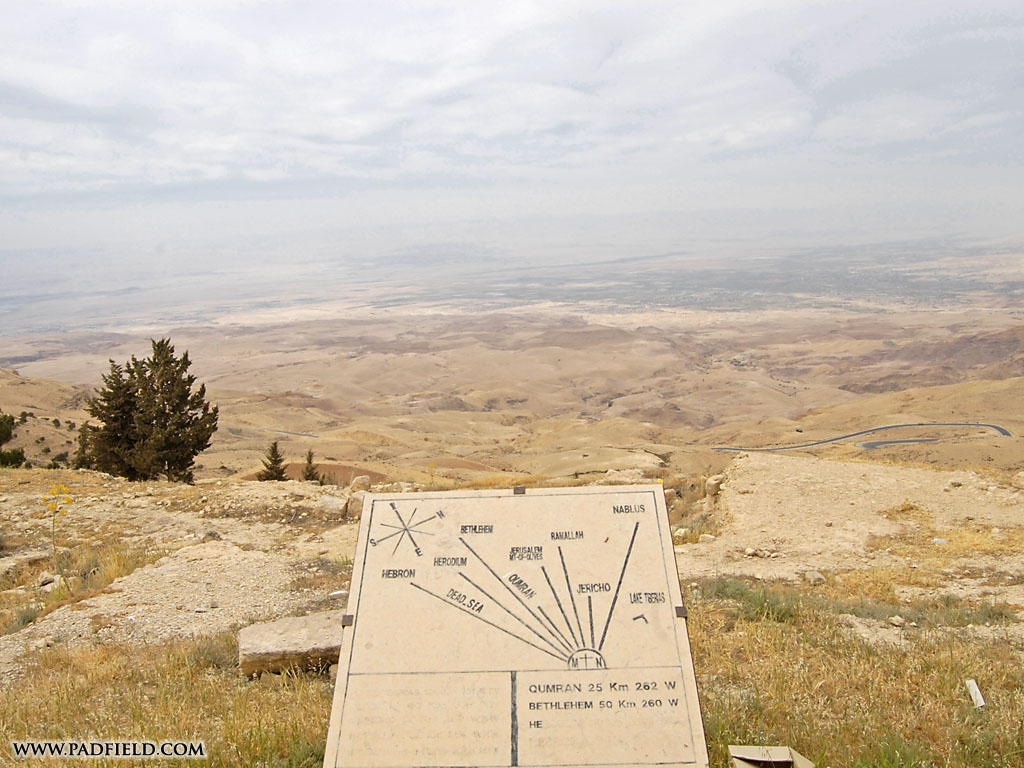
The view from Mt. Nebo today.
Parshat Chol Hamoed raises some interesting questions for us as educators. The obvious one is the focus on the calendar. We live and die by them it seems. Of course as educators, we are working on Chanukah or even Tu Bishvat (for the Type A personalities, not me) while still in the midst of the Fall festivals. As educators, I think we are sometimes living anachronisms – not outdated, but living out of sync with real time as we work to create programs, lessons and experiences that will be implemented months down the road.

But let’s step beyond the calendar. We have three holidays in the rear view mirror and one to go before the Blessed month of Cheshvan (nutty rabbis of the Talmud called it "bitter" Cheshvan because there were no festivals in it – maybe they didn’t want to have to actually come up with other topics to talk about?) and a full return to our regularly scheduled curriculum.

I was learning over Zoom with Rabbi Mark Borovitz two days ago and he asked me an interesting question—especially with Simchat Torah looming. 

“What happens at the end of the Torah?”

[I paused here and invited my colleagues to suggest answers.]

All of those are there. I had said "Moses dies."

Then he asked: “What happens to the Israelites at the end of the Torah?”

I answered that they are at the foot of Mt. Nebo waiting to enter the land.

Now he was almost yelling: “Why does the Torah leave them there? Why don’t they get to enter the land while still in the Torah?”

Then it hit me. It is not about getting there. It is about the journey. It is about getting through each day, moving closer to the goal. 

Rabbi Borovitz works with addicts at Beit T'shuvah in Los Angeles. Addicts do not talk about being cured or being finished with their recovery. Recovery is something that happens every day for the rest of their lives – if they are successful. It ends when they die or when they return to their addiction. 

They don’t get to the Promised Land. Or if they do, they do not get to lie under their vine and fig tree. Their – and our – struggle continues every day.

The Torah doesn’t end with the death of Moses and the people waiting for the Book of Joshua to begin - as if it was just a book in a series like Harry Potter or The Lord of the Rings. The Torah ends by us going back to the beginning and chanting Bereishit: "When God began to create the heavens and the earth."

This is a metaphor made for educators. We get relatively few kudos compared to clergy who are with our members during their happiest and saddest moments. We count our moments of victory over a longer period of time. We don't get or provide a lot of immediate gratification, like people experience with a Bar or Bat Mitzvah, a Wedding or even a funeral. 

WE have to wait half a generation to learn if our learners take up the cause of the Jewish people and raise Jewish children themselves. We keep going back to the beginning, like the weekly Torah reading. 

May we all find joy and radical amazement as we finish and restart the Torah this Sunday night. 

Wednesday, September 25, 2019

The year of exhaling (a bit) - תש''פ


The new Hebrew year, 5780, will be written תש''פ

That can be translated to mean: to exhale, to blow out, to hiss, to sting or even to blow fiercely. (Isn’t language wonderful?)

Let’s look at the first translation. Rabbi Isaac Luria, often called the ARI, was a mystic who lived in Tz’fat in the 16th century. He told the story of how God had to contract Godself (the Divine Essence) in order to make room to create the universe. He called that act of contraction Tzimtzum – God removed a bit of Godself to make room.

My friend and teacher Joel Grishaver (who may be a descendant of Rabbi Luria) described Tzimtzum as if you had just exhaled after quickly inhaling, making your chest and stomach contract.

Sometimes, when we withdraw a bit of ourselves, we make room for others to step up and take ownership of what is happening around us. That can be particularly useful in experiential learning.

We as teachers have to step back sometimes – just a little – in order to invite the learners to take ownership of their own learning. My wish for the new year – the year of exhaling (a bit) – for us, the teachers, is that we all develop our capacity and the skills needed to draw our learners in deeper and make space for them to step up. Let’s all put a little Tzimtzum into our lesson plans!

(Incidentally, the story goes on that God put the Divine Essence that was removed into vessels made from earthen clay. They cannot hold the Godstuff and shatter. He said our job was to remove the worthless shards of the vessels - sin, bad behavior, evil, etc – from the world and seek out the sparks of Divine Essense – good loving, kind deeds,Mitzvot, etc. This process is called Tikkun Olam – World Repair).

ShareThis